
Farro: Ancient Grain, Modern Flavor
My newest favorite grain is farro. It’s not typically included on the superfoods list like quinoa or barley but in my opinion, it should be. It absorbs flavor beautifully, maintains a satisfying chew, and brings a sense of substance to the table without feeling heavy or complicated. It’s also easy to cook, freezes well, is extremely versatile, plus it tastes good! It’s been around forever resulting in a rich culinary story of tradition, texture, and versatility.
In this post, we’ll explore farro from every angle—its long history, its place in traditional and modern cuisines, how to cook it well, and why it continues to earn a place in contemporary kitchens. Whether you’re discovering farro for the first time or returning to a familiar favorite, this grain has a way of slowing things down and reminding us that good food doesn’t need to be rushed.
A Grain Through the Ages
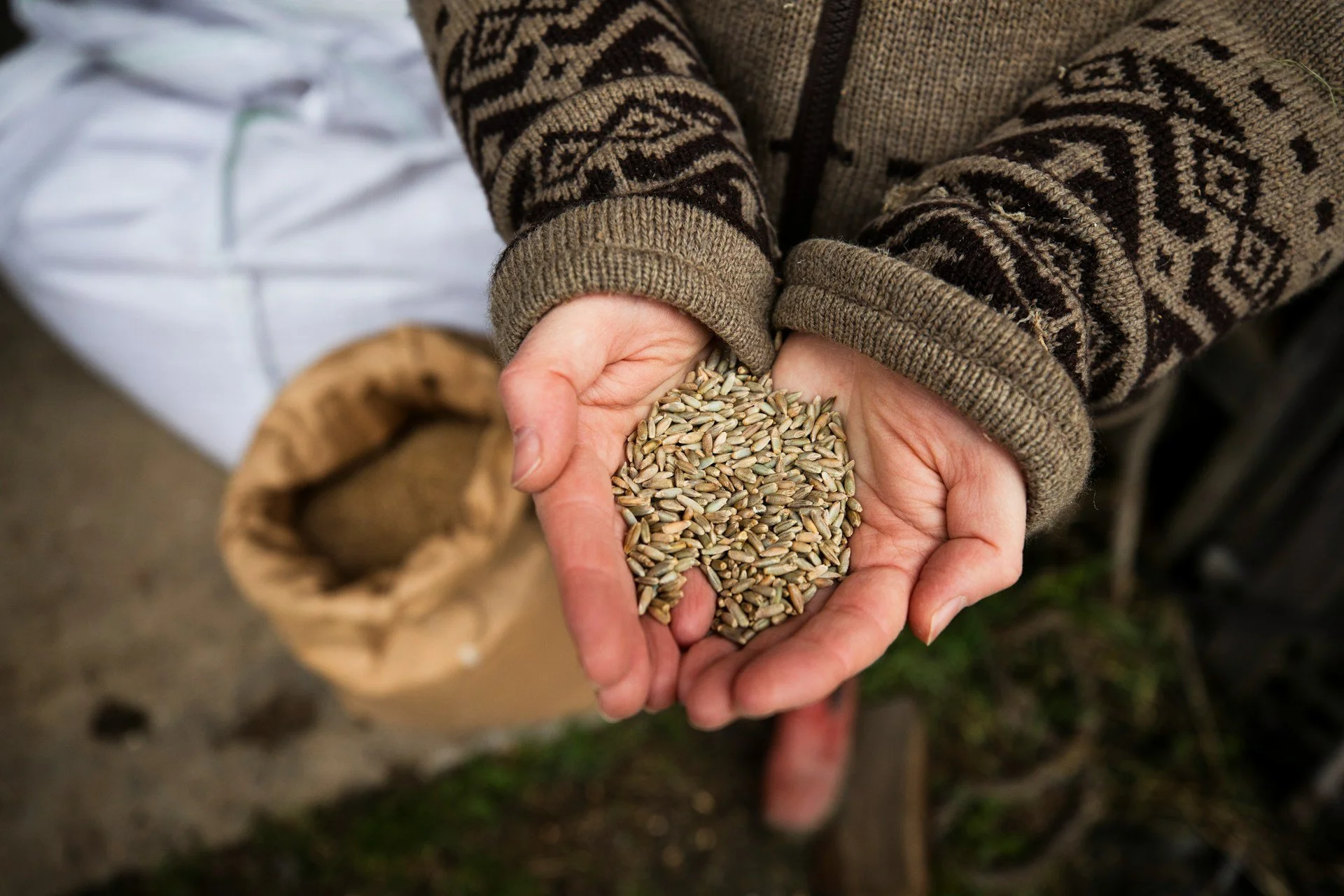
Farro’s roots stretch back thousands of years to the earliest days of agriculture. Originating over 5,000 years ago in the Fertile Crescent, it was among the first plants domesticated by humans. As societies cultivated farro, it became a staple across ancient civilizations — from the fields of Mesopotamia to the tables of Roman citizens and Etruscan communities in what is now Italy. In Italy, farro became particularly associated with Tuscany and Umbria, where it remains a cherished part of traditional cooking.
Historically, farrow was considered a “poor man’s grain” because it was hearty, easy to grow, and provided long-lasting nourishment. However, it was more than just a food crop; it played roles in religious and cultural practices. In ancient Rome, for example, grains like farro were integral to rituals, symbolizing fertility and prosperity.
Though later eclipsed by modern wheat due to easier processing and higher yields, farro never disappeared — it simply receded into regional traditions, particularly in rural Italy. Over the last few decades, chefs and home cooks alike have rediscovered its robust texture and understated flavor, making it a favorite among lovers of whole foods and ancient grains.

Farro thrives in the Mediterranean climate, with Italy being the most famous modern growing region. Small-scale farms in Tuscany, Umbria, and Abruzzo continue to cultivate farro using traditional methods, often by hand.
The grain grows in a hardy stalk that is resistant to drought and cold, making it a reliable crop for regions with less predictable weather. It’s typically harvested in late summer and then hulled to remove the tough outer layer.
Over the last few decades, chefs and home cooks alike have rediscovered its robust texture and understated flavor, making it a favorite among lovers of whole foods and ancient grains. It’s often associated with Tuscan cuisine with classic dishes like minestra di farro (farro soup) and Farro e Fagioli (farro with beans) showcasing its chewy texture and ability to absorb flavor without losing shape. Its enduring popularity today speaks to both its flavor and its cultural significance.
What Farro Is - and Isn’t
Farro is frequently referred to as a single grain, but it’s actually a term applied to a group of wheat species that share similar characteristics and history. The most commonly available form in the US and Europe is emmer wheat (Triticum dicoccum). Other historical types include einkorn (Triticum monococcum) and spelt (Triticum spelta), but emmer is what you’ll most often find labeled as farro in grocery stores and markets.
Farro is a gluten-containing grain - it is wheat, after all - so it isn’t suitable for those with celiac disease or gluten sensitivity.
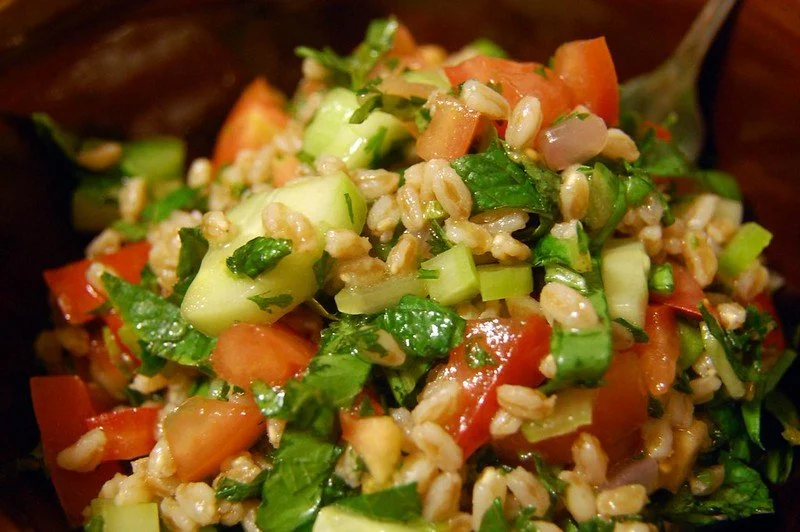
Farro with cucumber, celery, tomatoes, parsley, and mint-lemon vinaigrette.
Varieties of Farro
Farro comes in three common forms:
Whole (farro integrale/spelt berries): The least processed, with the bran intact. It has the richest texture and flavor with a firm, chewy texture but takes the longest to cook.
Semi-pearled: Part of the bran layer is removed, which shortens cooking time while retaining much of the grain’s character and chewiness.
Pearled (perlato): The bran is removed entirely. It cooks faster and has a softer texture but slightly fewer nutrients. It is ideal for soups and salads.
Think of these like rice types — similar grains but with different textures and cooking needs. Whole farro will be firmer and more “toothsome,” while pearled is softer and quicker. The subtle differences between varieties allow farro to be used flexibly, depending on the desired texture in a recipe.
Why Farro Excels in Make-Ahead Cooking
Farro is especially valued by cooks who plan ahead. Once cooked, it:
Maintains texture for days
Reheats well without becoming mushy
Absorbs dressing and sauces over time
Works equally well hot or cold
This makes it ideal for batch cooking, weekly meal planning, and entertaining.
Buying and Storing Farro
Farro is available in most well-stocked grocery stores, specialty markets, and online.
Shopping tips:
Look for whole farro when possible, as it retains the most flavor and nutrients.
Pearled or semi-pearled options cook faster but are slightly less nutrient-dense.
Farro can usually be found in the grains aisle, bulk bins, health food stores, and online.
Storing farro:
Keep dry farro in an airtight container in a cool, dry pantry.
For cooked farro, refrigerate and use within 3–5 days, or freeze portions for longer storage.
Whole grains stored properly can last up to a year; the less processed pearled versions should be used within about six months.
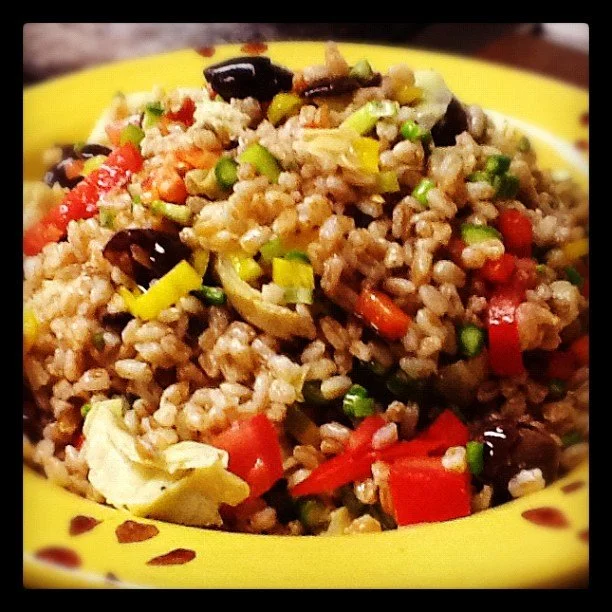
Farro della Garfagnana in Versione Estiva
Culinary Uses and Flavor Profile
Farro’s flavor is pleasantly nutty with a subtle sweetness. When cooked right, it offers a satisfying chew that stands up well to both rich sauces and light dressings. Its texture holds up in cold salads and warm risottos alike.
How cooks and chefs commonly use farro:
Warm grain salads: Tossed with roasted vegetables, nuts, and bright vinaigrettes.
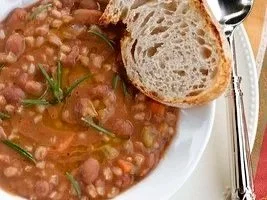
Hearty soups and stews: Provides body and chew without becoming mushy; adds a contrast to softer ingredients.
Grain bowls: Combined with proteins, greens, and sauces for a wholesome meal.
Stir-ins for roasted vegetables or legumes: Farro brings texture contrast.
Substitute for rice or barley: In pilafs, risottos, and side dishes, often with olive oil, herbs, or cheese.
Breakfast porridge or warm cereal: Simmered with milk or plant milk and topped with fruit and nuts.
Farro absorbs flavors beautifully while maintaining its integrity, making it a versatile canvas for a wide range of cuisines. Because farro holds its form, it’s especially good for make-ahead meals and reheats well without turning mushy.
Signature Farro Recipes
Below are foundational recipes that showcase farro’s versatility and can easily be adapted.
Mediterranean Farro Salad Toss warm farro with olive oil, lemon juice, chopped parsley, cucumber, tomato, red onion, olives, and feta. This salad improves as it rests, making it ideal for gatherings or meal prep.
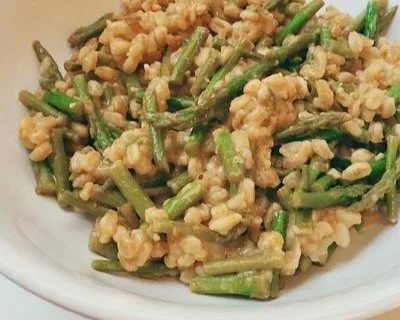
Farro “Risotto” with Mushrooms Using the risotto technique — gradually adding warm broth and stirring — creates a creamy dish without sacrificing farro’s chew. Finished with butter, Parmesan, and herbs, this preparation highlights farro’s ability to feel luxurious without being heavy.
Hearty Farro and Vegetable Soup Farro replaces pasta or rice in soups, adding substance and depth. Combined with beans, vegetables, and herbs, it creates a deeply satisfying one-pot meal.
Cooking Farro: Techniques That Bring Out Its Best
Farro is forgiving, flexible, and deeply satisfying to cook. Unlike more delicate grains, it holds its shape well and welcomes experimentation. Understanding a few foundational techniques allows farro to shine in everything from rustic soups to elegant grain bowls.
Rinsing and Prepping
Before cooking, farro should be rinsed under cool running water to remove dust and excess starch. Unlike rice, soaking is optional. Whole farro may benefit from a brief soak (30–60 minutes) to shorten cooking time slightly, but it’s not required.
Some cooks like to toast farro briefly in a dry pan or with a bit of olive oil before adding liquid. This step deepens the grain’s nutty aroma and adds subtle complexity, especially when farro will be served simply or as a featured ingredient.
Stovetop Method (Classic and Reliable)
The stovetop method is the most traditional and offers the greatest control over texture.
Basic approach:
Use a 3:1 ratio of liquid to farro
Bring to a gentle boil, then reduce to a simmer
Cook uncovered or partially covered
Drain excess liquid if needed
Approximate cooking times:
Whole farro: 35–45 minutes
Semi-pearled farro: 25–30 minutes
Pearled farro: 15–20 minutes
The goal is tender grains with a pleasantly chewy center — farro should never be mushy.
Rice Cooker Method (Hands-Off Convenience)
Farro adapts beautifully to a rice cooker, making it ideal for batch cooking.
Add rinsed farro and liquid directly to the cooker
Use the same 3:1 liquid ratio
Cook on the “brown rice” or “whole grain” setting if available
This method is especially helpful for weekly meal prep, as farro holds its texture well for several days once cooked.
Pressure Cooker or Instant Pot
For cooks short on time, pressure cooking farro delivers excellent results.
Whole farro: ~15 minutes at high pressure
Pearled farro: ~10 minutes at high pressure
Allow natural pressure release for best texture
Pressure cooking preserves farro’s chew while significantly reducing cook time — useful for soups and stews where timing matters.
Cooking Liquid Matters
Water works perfectly well, but farro truly shines when cooked in broth or stock. Vegetable broth adds subtle depth, while chicken or mushroom stock enhances savoriness. Aromatics such as bay leaf, onion, garlic, or a strip of lemon peel can be added to the cooking liquid to infuse gentle flavor.
Once cooked, farro benefits from a light seasoning of salt and olive oil while still warm, helping it absorb flavor more evenly.
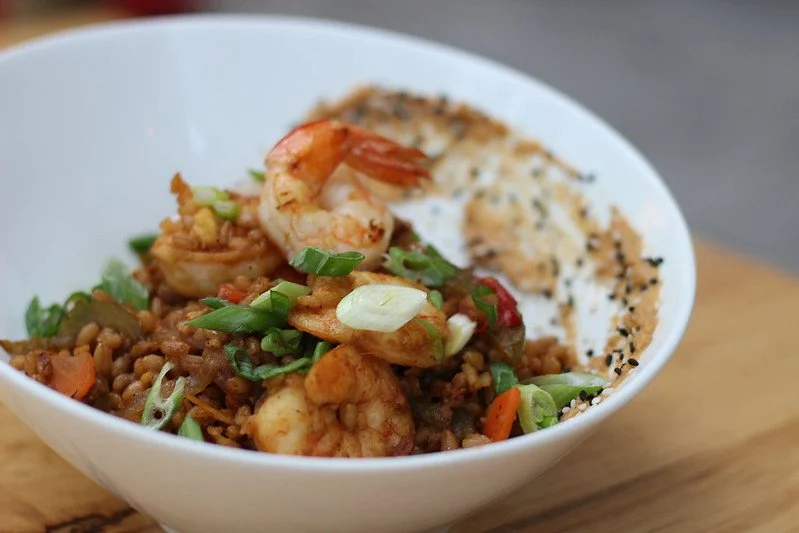
Farro Fried Rice with a red curry cashew butter and shrimp
Farro as a Culinary Canvas: Flavor Pairings
Farro pairs exceptionally well with a wide range of flavors. Its mild nuttiness complements both bold and subtle ingredients.
Proteins
Chicken
Lamb
Sausage
Beans and lentils
Eggs
Cheeses and Finishing Touches
Parmesan
Pecorino
Feta
Ricotta salata
Olive oil, lemon, vinegar
Herbs and Aromatics
Rosemary, thyme, sage
Parsley, basil, dill
Garlic, shallots, leeks
Vegetables
Mushrooms
Winter squash
Tomatoes
Leafy greens
Roasted root vegetables
Farro’s ability to absorb flavor while maintaining its structure makes it particularly well-suited to layered dishes where texture matters.
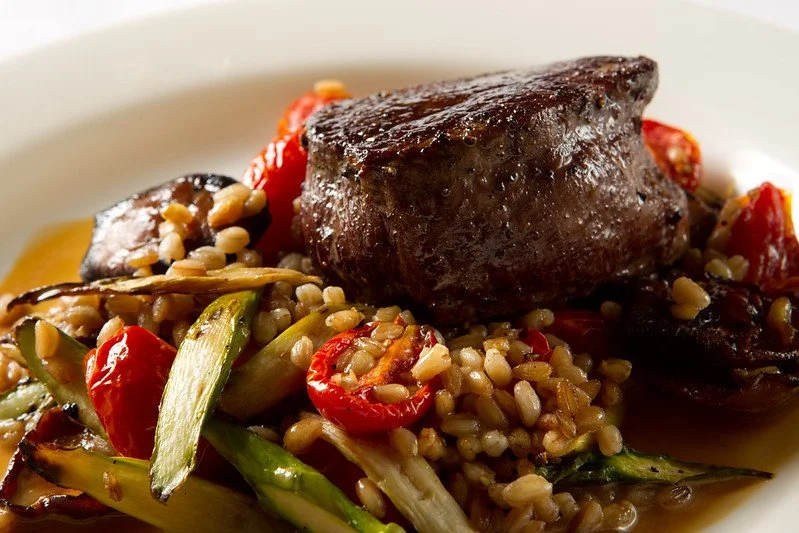
Beef Tenderloin with Shiitake, Asparagus, Tomato, Farro, Buttered Mushroom Soy Sauce
Farro Across the Day: From Breakfast to Dinner
One of farro’s strengths is its adaptability across meals. Its neutral flavor allows it to move seamlessly from sweet to savory preparations.
Breakfast Farro
Cooked farro can be warmed with milk or plant-based alternatives and gently sweetened with honey or maple syrup. Spices like cardamom, cinnamon, or orange zest pair beautifully with farro’s nutty notes. Fresh fruit, nuts, or seeds add texture and contrast.
This porridge-style preparation feels comforting and substantial, especially during cooler months.
Lunch: Grain Salads and Bowls
Farro excels in room-temperature and cold salads because it retains structure without clumping. Tossed with vinaigrette while still warm, it absorbs flavor more readily, creating salads that improve with time.
Common additions include roasted vegetables, fresh herbs, beans or lentils, olives, capers, or pickled vegetables, and crumbled cheeses
Farro grain bowls work especially well for make-ahead lunches, as they hold up beautifully over several days.
Dinner: Soups, Sides, and Main Dishes
Farro’s chewiness makes it a natural fit for hearty soups and stews. Unlike rice or pasta, it doesn’t break down during longer cooking, maintaining texture even after reheating.
As a side dish, farro can replace rice, barley, or potatoes, particularly alongside braised meats, roasted vegetables, or sautéed greens.
Farro in World Cuisines: Beyond Italy
While farro is most closely associated with Italian cooking, its relatives and culinary cousins appear across many food cultures. Because farro is a form of ancient wheat, it has quietly influenced traditional dishes far beyond Tuscany — sometimes under different names, sometimes simply as “grain.”
Mediterranean Traditions
In the broader Mediterranean region, farro-like grains have long been used in soups, pilafs, and rustic breads. Greece, for example, uses cracked wheat preparations that echo farro’s hearty texture. In parts of the eastern Mediterranean, whole grains similar to farro are simmered with onions, olive oil, and herbs, forming the backbone of simple, sustaining meals.
Farro fits naturally into Mediterranean cooking because it complements olive oil, lemon, vegetables, and herbs — flavors that define the region. It works beautifully in mezze-style spreads, paired with roasted vegetables, yogurt-based sauces, and marinated legumes.
Middle Eastern–Inspired Uses
Though bulgur and freekeh are more traditional to Middle Eastern cuisines, farro performs a similar role. Its chewiness makes it a satisfying alternative in grain salads inspired by tabbouleh or pilafs scented with cumin, coriander, cinnamon, and allspice.
Farro’s neutral flavor allows spices to shine, making it an excellent base for dishes that lean on warm, aromatic seasoning. Tossed with chickpeas, caramelized onions, herbs, and a drizzle of olive oil, farro becomes deeply comforting and richly flavored.
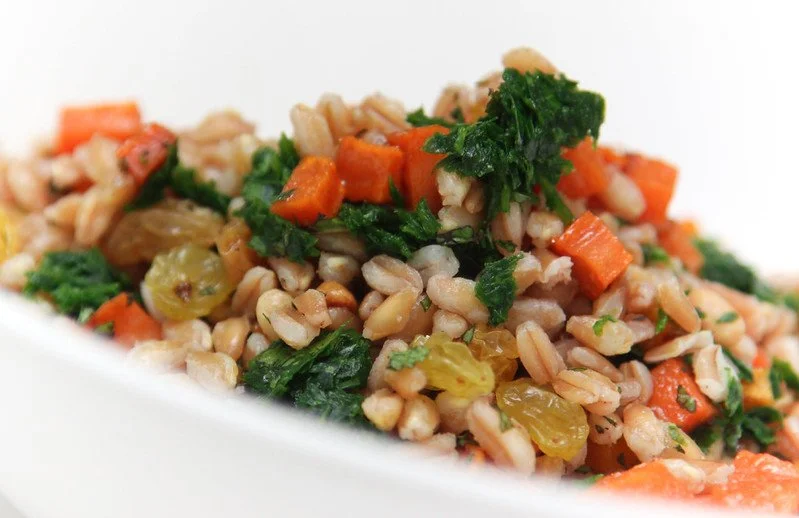
Farro Butternut Squash Pilaf
Northern European and Rustic Cooking
In cooler climates, whole grains have historically been valued for their ability to sustain through long winters. Farro aligns well with the flavors of northern European kitchens: mushrooms, root vegetables, brassicas, butter, and cream.
In these contexts, farro appears in:
Creamy grain bakes
Hearty soups
Mushroom-forward dishes
Braised meat accompaniments
Its ability to absorb savory flavors makes it a natural fit for dishes that simmer slowly and develop depth over time.
Modern American and Global Fusion Cooking
In contemporary kitchens — particularly in the U.S. — farro has found new life as a versatile, globally adaptable ingredient. Chefs and home cooks alike use it as a base for bowls, salads, and composed plates that draw inspiration from multiple cuisines.
You’ll find farro paired with:
Miso and roasted vegetables
Chimichurri and grilled meats
Tahini, yogurt, or herb-forward sauces
Pickled vegetables and fermented condiments
This adaptability is part of why farro feels so at home in modern cooking: it respects tradition while welcoming creativity.
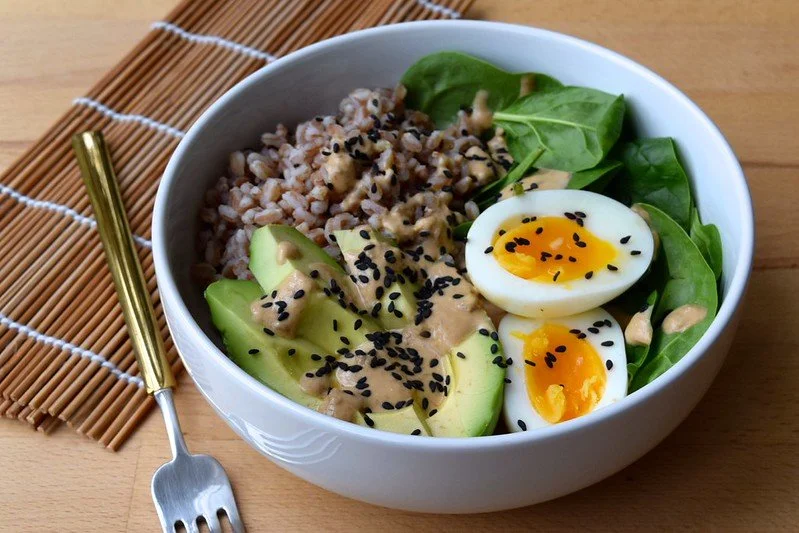
Farro, Avocado, Spinach & Egg Breakfast Bowl with Miso Yogurt Dressing
Nutritional Snapshot
Farro is a quiet powerhouse for women and men, especially when the goals are steady energy, healthy weight, and long‑term vitality. As an ancient whole grain with a pleasantly chewy texture and nutty flavor, it brings together fiber, protein, and key micronutrients in a way that supports this life stage’s changing metabolism and hormone landscape.
Slow, steady energy and blood sugar support Per ¼ cup uncooked (about 45–50 grams), farro typically provides around 140–170 calories, roughly 30–36 grams of carbohydrates, about 1 gram of fat, 3–5 grams of fiber, and 5–6 grams of protein. This fiber‑and‑protein pairing slows glucose absorption, which can help blunt the blood sugar spikes and crashes that can translate into fewer afternoon slumps, more stable mood, and less reactive snacking.
Fiber for gut, heart, and weight A serving of farro provides roughly 3–5 grams of fiber, contributing about 10–20% of daily fiber needs in one small swap. This fiber supports regular digestion, feeds beneficial gut microbes, and helps you feel pleasantly full after meals. Higher fiber intake is consistently linked with lower risks of cardiovascular disease, type 2 diabetes, and obesity—key concerns as estrogen drops and cardiometabolic risk rises.
Protein and key micronutrients With about 6 grams of protein per ¼ cup dry, farro outperforms many common grains and rivals some trendier options. From around age 40, maintaining muscle mass becomes essential for metabolism, strength, bone health, and balance, and protein needs often increase. Using farro as the base of bowls, salads, or soups—especially when paired with beans, lentils, or quality animal proteins—helps nudge total protein intake upward in an easy, flavorful way.
Farro also supplies magnesium, iron, zinc, and B vitamins such as niacin. Magnesium supports bone health, blood pressure, muscle function, and energy production, while iron and B vitamins help with red blood cell formation and fatigue. Zinc adds immune and skin health support, stacking small daily benefits over time.
Whole‑grain protection over the long haul Because farro is a whole or minimally processed grain, it retains the bran and germ, where antioxidants like polyphenols, carotenoids, and selenium live. Diets rich in whole grains are associated in large observational studies with lower risks of heart disease, type 2 diabetes, obesity, and some cancers—conditions that become more prevalent with age and that disproportionately impact women after menopause.
One important note: Because farro is a whole wheat grain with gluten, it is not appropriate for gluten-free diets. Some people find that ancient grains feel easier to digest than highly processed counterparts, but farro still contains gluten and should be avoided by anyone with celiac disease or gluten-related disorders. For people who tolerate gluten, however, farro can be an especially satisfying and nutrient‑dense upgrade from refined carb staples, aligning beautifully with a whole‑food, plant‑forward way of eating in midlife and beyond.
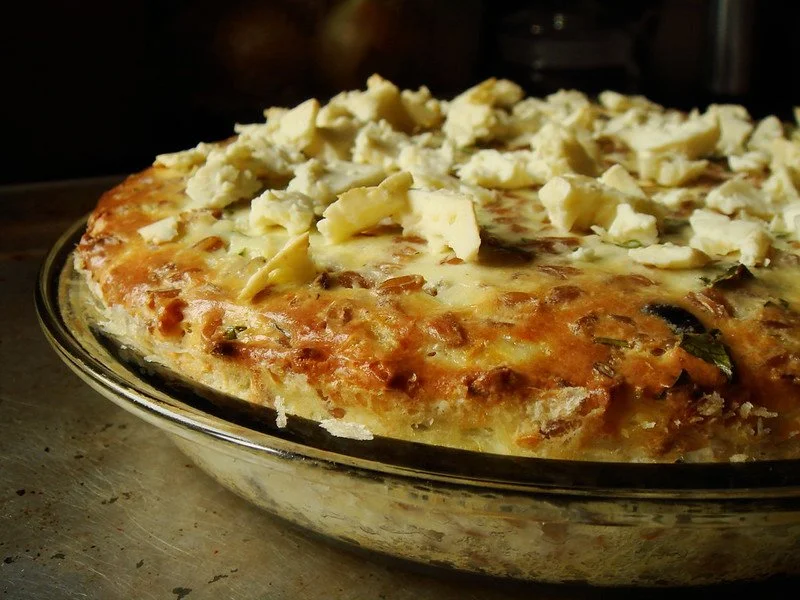
Savory Ricotta Farro Tart with Black Olives and Feta
Why Farro Endures
Farro has lasted not because it follows trends, but because it satisfies something deeper. It offers texture in a world of soft foods, history in an era of convenience, and adaptability without losing its character.
Cooking farro encourages a slightly slower rhythm — a willingness to simmer, taste, adjust, and build flavor. It rewards patience without demanding perfection. In many ways, it represents the kind of cooking that nourishes not just the table, but the experience of being in the kitchen.
From ancient fields to modern bowls, farro remains what it has always been: a grain that brings substance, warmth, and quiet richness to meals. Whether you use it in a simple soup, a carefully composed salad, or a celebratory dish shared with others, farro invites you to cook with intention — and to savor the results.
Let’s get cooking!
Learning to cook farro well gives you a tool you’ll return to again and again. It’s a grain that brings structure, balance, and quiet sophistication to everyday cooking.
Broccoli, Sweet Pepper, and Cheddar Farro Gratin
Broccoli, Sweet Pepper, and Cheddar Farro Gratin brings together tender vegetables, a creamy cheese sauce, and farro’s signature chewy texture in a cozy, oven-baked dish finished with a crisp cracker crust. Farro adds substance and depth, creating a gratin that feels satisfying without relying on heaviness alone. As an ancient whole grain, farro contributes fiber, plant-based protein, and long-lasting energy, making this dish both comforting and nourishing. Thyme lends an earthy backbone, while fresh parsley brightens the finished gratin, balancing richness with freshness.
Equally suited as a vegetarian main or a hearty side, this gratin is ideal for make-ahead meals, casual gatherings, or weeknight dinners that feel thoughtful and grounding.
Broccoli, Cheddar, and Farro Gratin
Ingredients
- 3/4 cup pearled farro, rinsed
- 1 1/2 cups water or stock
- 2 tbsp butter
- 1 tbsp olive oil
- 1/2 cup diced onion
- 2 cloves garlic, minced
- 1/2 tsp dried thyme
- 1/2 tsp smoked paprika
- 1 bay leaf
- 2 tbsp flour
- 1 1/2 cups milk
- 1/2 tsp Dijon mustard
- 4 oz shredded sharp cheddar cheese
- salt and pepper
- 3 cups blanched broccoli florets
- 1/2 cup diced red pepper
- 1/2 cup cracker crumbs
- 1 tbsp parmesan cheese
- 1 tbsp fresh parsley
- black pepper
- 1 1/2 tbsp melted butter or olive oil
Instructions
- Bring the water to a boil in a small sauce pot. Add the rinsed farro, reduce the heat, and simmer for 20 - 25 minutes until tender yet chewy. Drain and set aside.
- Preheat oven to 375°F (190°C). Lightly butter or oil a medium baking dish.
- Heat the butter and olive oil in a medium pot over medium high heat. Add the diced onion and sauté for 4 - 5 minutes until soft.
- Add the garlic, thyme, smoked paprika, and bay leaf. Continue cooking for one minute.
- Add the flour, stirring well to combine. Cook for 2 minutes stirring frequently to keep from burning.
- Add 1/2 cup of the milk and whisk until smooth. Add the remaining milk and Dijon mustard, whisking until smooth.
- Bring to a boil, reduce the heat and simmer for 4 - 5 minutes until thickened.
- Remove from the heat, stir in the cheddar cheese. Taste and correct seasoning.
- Add the farro, broccoli, and red pepper to the cheese sauce and stir to combine.
- Pour into the prepared casserole dish.
- In a small bowl, mix cracker crumbs with melted butter, Parmesan, parsley, and black pepper. Sprinkle evenly over the top.
- Bake uncovered for 25–30 minutes, until bubbling around the edges and golden on top. For extra color, broil for the final 2–3 minutes if needed.
- Let rest for 5–10 minutes before serving.
Notes
- Make it heartier: Add sautéed mushrooms or caramelized onions.
- Change the cheese: Sharp white cheddar, Gruyère, or a cheddar–Gruyère blend work beautifully.
- Extra crunch: Add chopped toasted walnuts or almonds to the breadcrumb topping.
- Make-ahead friendly: Assemble fully, refrigerate, and bake when ready (add 5–10 minutes to baking time).
Creamy Orange Cardamom Farro Breakfast Bowl
Creamy Orange Cardamom Farro Breakfast Bowl brings together bright citrus, gentle spice, and the comforting texture of farro in a breakfast that feels both special and grounding. Pearled farro is slowly simmered in a blend of water and fresh orange juice, allowing the grains to absorb subtle sweetness along with fragrant notes of cardamom and cinnamon. Chopped Medjool dates melt into the mixture as it cooks, adding natural sweetness and depth without overpowering the dish.
Once tender, the farro is finished with milk and ground flax, creating a creamy, porridge-like consistency that’s both comforting and substantial. Finished with berries, nuts, seeds, or an extra splash of warm milk, this bowl is endlessly customizable making it well suited for slow mornings or make-ahead breakfasts that support steady energy throughout the day.

Creamy Orange Cardamom Farro Breakfast Bowl
Ingredients
- 1/2 cup pearled farro, rinsed
- 1/2 cup water
- 1/2 cup orange juice
- 1/2 tsp ground cardamom
- 1/4 tsp ground cinnamon
- 2 medjool dates, diced
- pinch salt
- 1/2 cup milk of choice
- 1 tbsp ground flax seed
- toppings of choice: berries, nuts, seeds, hot milk
Instructions
- Bring the water, orange juice, cardamom, cinnamon, and salt to a boil.
- Add the rinsed farro and dates, reduce the heat, and simmer for 20 - 25 minutes until all the liquid is absorbed and the farro is tender.
- Add the milk and flax seed and continue cooking until thick and creamy.
- Divide into serving bowls and top with desired toppings.
There you have it!
Farro doesn’t need much to shine - just time, care, and good ingredients. When you cook with intention, even the simplest grains can feel deeply nourishing.